

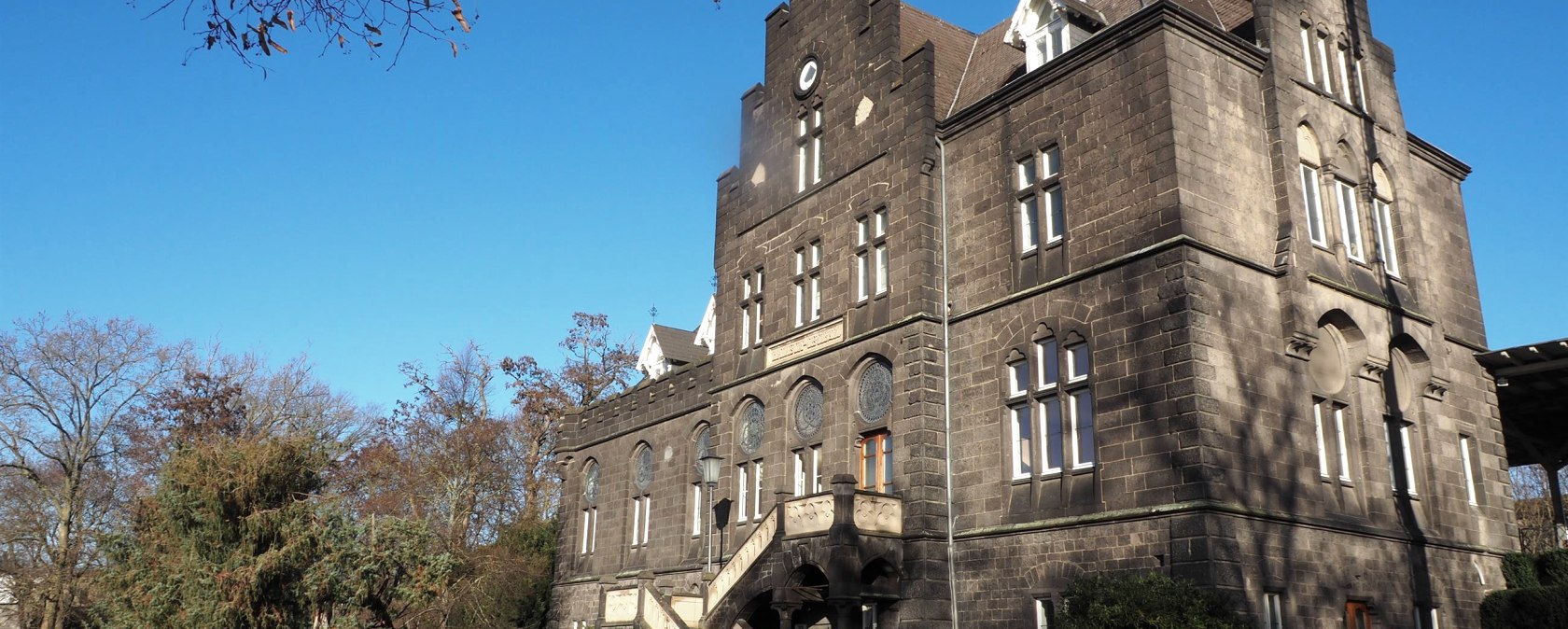
Kaiserbahnhof, © VG Mendig/Neideck

Kaiserbahnhof

Mendig

In 1877 the so-called Kaiserbahnhof was built in Mendig.
It is considered to be one of the most beautiful historical buildings in the Mendig region.
The representative furnishings show the importance that was then attached to the railroad as a means of transport.
The building is now privately owned.
It has been restored in an exemplary manner and furnished with apartments and offices.
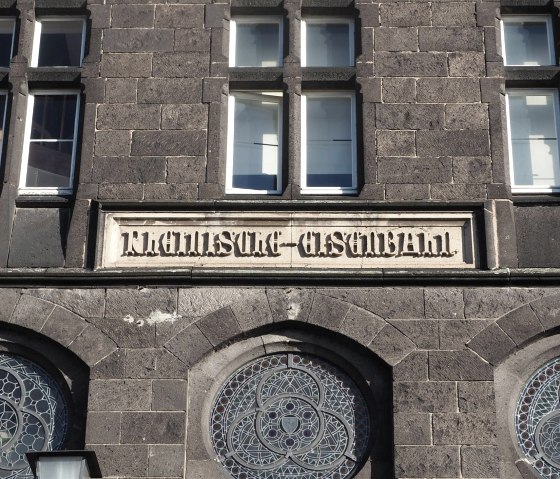
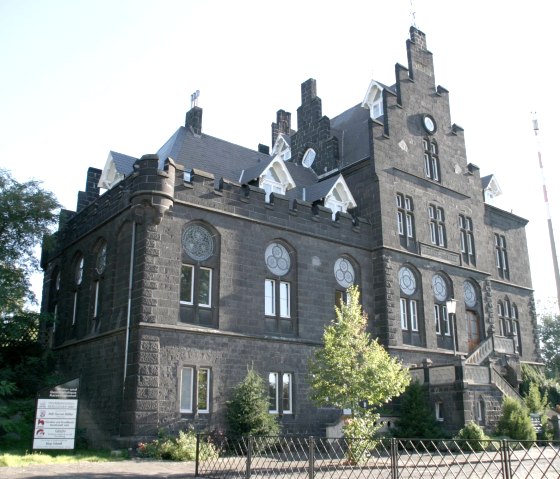
Neo-Gothic style elements dominate the facade.
The floors are continuously structured with cornices. The building edges are emphasized by corner cuboids.
Access is via a two-flight platform staircase.


The building was named because Kaiser Wilhelm II is said to have used it as a starting point for visits to Eifel maneuvers.
It is proven that he visited the Maria Laach monastery from there in a carriage.
mehr lesen

Share content:

At a glance

Opening hours

  • From January 1st to December 31st
    Monday
    00:00 - 23:59

    Tuesday
    00:00 - 23:59

    Wednesday
    00:00 - 23:59

    Thursday
    00:00 - 23:59

    Friday
    00:00 - 23:59

    Saturday
    00:00 - 23:59

    Sunday
    00:00 - 23:59

The Emperor's Station can be visited year-round.

Place

Mendig

Contact

Kaiserbahnhof
Am Bahnhof
56743 Mendig

Bitte akzeptieren Sie den Einsatz aller Cookies, um den Inhalt dieser Seite sehen zu können.

Alle Cookies Freigeben

Plan your journey

per Google Maps

You might also be interested in

Aufschluss, © Baumann Fotografie

Gleitfalte am Dachsbusch

The mining of volcanic material on the Dachsbusch ate deeper and deeper into the old cinder cone. It gives us an insight into the volcanic and climatic history. The volcanic layers show how they slipped during a cold period about 150,000 years ago due to the alternation of thawing and freezing. The badger bush does not need to fear further depletion, as the area is now a nature reserve. Follow the signposted path to the right up to the gliding fold, where you will find more information.

Aufschluss, © Baumann Fotografie

Aschestrom in Bad Tönisstein

Almost 13,000 years ago, glowing clouds from the Laacher See volcano raced down the Brohltal and filled it with loose volcanic masses. This impressive spectacle can still be seen here today. Follow the road on the right behind the building complex and go uphill for a few meters. On the slope to the right, the layers of ash (trass) that have settled on the rocks of the older basement can be clearly seen. And where volcanoes were active, mineral springs are usually not far away.